
Pea Gravel Calculator — How Much Pea Gravel Do I Need?
Calculate tons, cubic yards, and delivered cost to your ZIP.
- Florida delivery — as fast as next day
- Upfront ZIP pricing — no surprise fees
- No signup required
3. Enter Dimensions
Ready to Calculate
Enter your dimensions on the left to see your recommended order quantity for the selected product.
Upfront ZIP pricing
No bait-and-switch. See exactly what you will pay for delivery to your ZIP.
Florida delivery network
Professional dump truck drivers across all of Florida. Same-day or next-day in most ZIPs.
Order online in 2 minutes
Skip the phone calls. Calculator to checkout in under 120 seconds.
4.8★ from verified customers
Real reviews from Tampa, Orlando, Miami, Jacksonville, and across Florida.
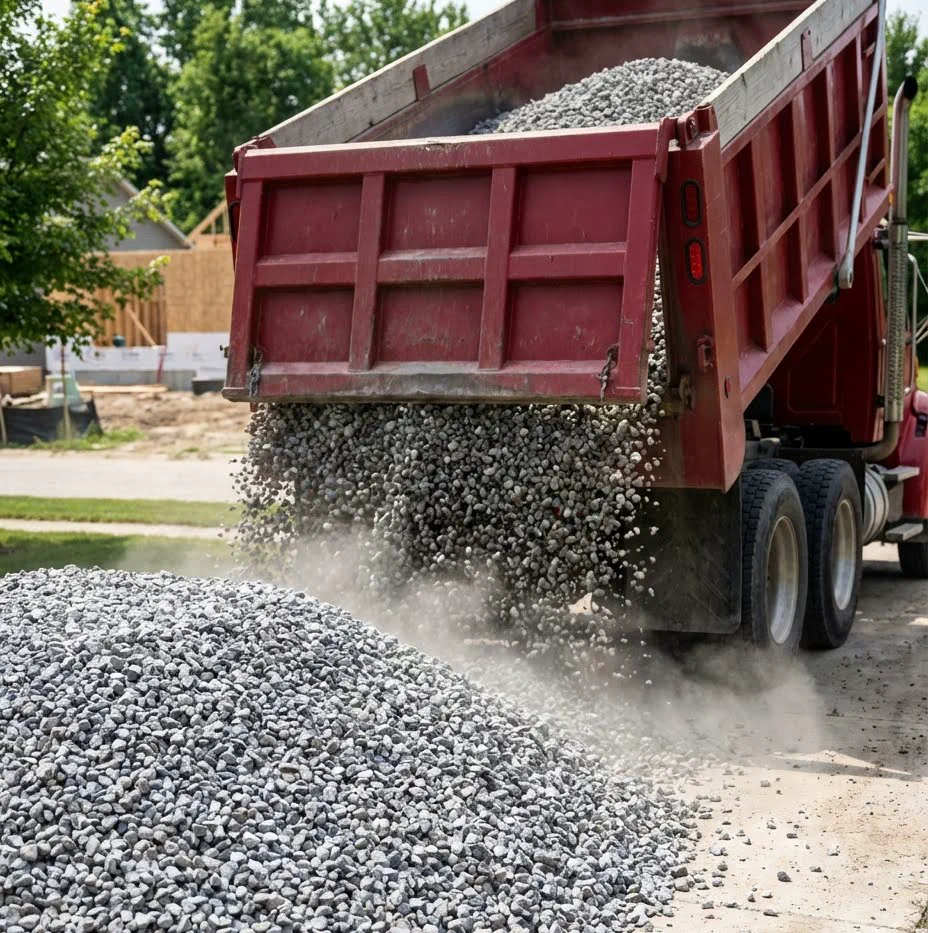
Pea gravel is small, rounded stone — typically ⅜" to ½" — used for walkways, playgrounds, drainage, and decorative ground cover. Enter your dimensions to find the exact tons or cubic yards you need.
How to use this pea gravel calculator
- 1
Measure the area
For a walkway, multiply length by width. For a free-form bed, treat it as a rectangle bounding the longest length and widest point.
- 2
Pick a depth
Use 2 inches for decorative ground cover, 3 inches for walkways and patios, and 4–6 inches for playground surfacing or drainage.
- 3
Add an edge buffer
Pea gravel migrates easily. The calculator already adds a buffer, but plan to top off the bed every 1–2 years if there is no edging.
- 4
Enter your ZIP
Florida ZIPs return a delivered price. Outside Florida the volume estimate still applies — request a quote for non-Florida delivery.
How the math works
Volume in cubic yards equals Length × Width × Depth (in feet) divided by 27. Depth in inches is divided by 12 first.
Pea gravel has a density of roughly 1.4 tons per cubic yard. Most suppliers sell pea gravel by the ton; the calculator handles the conversion using the live catalog density.
We apply a 10–15% buffer for settling and edge waste. Pea gravel does not compact much — most of the buffer covers stones that bounce out during install and the inevitable migration into adjacent beds.
How much does pea gravel cover?
Quick reference for how much area one ton and one cubic yard cover at common depths.
| Depth | 1 ton covers | 1 cubic yard covers |
|---|---|---|
| 1" | 231 sq ft | 324 sq ft |
| 2" | 116 sq ft | 162 sq ft |
| 3" | 77 sq ft | 108 sq ft |
| 4" | 58 sq ft | 81 sq ft |
| 6" | 39 sq ft | 54 sq ft |
| 12" | 19 sq ft | 27 sq ft |
Assumes a density of about 1.4 tons per cubic yard, typical for #57 limerock and most washed gravels. Denser crushed stone covers slightly less per ton.
Typical quantities by project
| Project | Depth | Area | Estimate |
|---|---|---|---|
| Backyard walkway 3 ft × 30 ft | 3" | 90 sq ft | ~0.9 cubic yards |
| Patio area 10 ft × 12 ft | 3" | 120 sq ft | ~1.2 cubic yards |
| Playground 20 ft × 20 ft | 6" | 400 sq ft | ~7.5 cubic yards |
| Decorative bed 200 sq ft | 2" | 200 sq ft | ~1.3 cubic yards |
| Drainage trench 30 ft × 1 ft | 12" | 30 sq ft | ~1.2 cubic yards |
Common ordering mistakes
From real deliveries — these are the mistakes we see most often. Avoiding any one of them saves a callback order.
Walkways that are too shallow
A 1-inch pea gravel walkway looks fine on day one and is patchy dirt by week two. Plan for 3 inches minimum over a compacted base, with edging on both sides.
No edging at all
Pea gravel will not stay put. Without steel, paver, or timber edging, expect to lose an inch of depth per year as stones scatter into the lawn, mulch beds, and driveway.
Skipping the base layer
Pea gravel on top of bare soil pushes into the dirt under foot traffic and disappears. Lay a 2-inch compacted base of crushed limerock or #57 first, then 2–3 inches of pea gravel on top.
Using pea gravel for driveways
Pea gravel rolls under tires and creates ruts. It is wrong for any vehicle surface. Use #57 stone or recycled asphalt millings for driveways and reserve pea gravel for foot traffic only.
Wrong size for playgrounds
Playground pea gravel should be rounded and roughly ⅜" — not crushed angular stone of the same size. Angular stone has sharp edges. Confirm the product is rounded before using it for play areas.
No landscape fabric
Without geotextile fabric between the soil and the pea gravel, the stones mix into the dirt over a few seasons. Fabric keeps the layers separate and the bed weed-free for years longer.
Frequently asked questions
Related calculators
Get delivered pricing in seconds
Florida delivery. Enter your ZIP or city for a live quote.
or Get a Quote →